🔥 20% OFF men's, women's and kids' jackets 🎯 Code: JACKET20 | Valid on full-price items only.

- Home
- Weapons
- Replicas
- Airsoft
- Bows
- Crossbows
- Optics
 Riflescope
- Variable Magnification
- Fixed Magnification
- Riflescopes with Parallax
- Riflescopes without Parallax
- Riflescopes for Airguns
- Hunting Riflescopes
- Driven Hunt Riflescopes
- Riflescopes for Rimfire Rifles
- Illuminated Riflescopes
- Non-Illuminated Riflescopes
- Riflescopes with mounts
- Riflescopes without mounts
- Riflescopes for airsoft
- By Parameters (Magnification × Diameter)
- Riflescope mounts
- Accessories for riflescopes
 Binoculars
- Monoculars
 Scope mounts and rings
 Reflex Sights
 Crossbow scope
- Self-defense
- Outdoor
- Clothes
- Brands

























Bows
In the bows category you can choose from our wide range of compound and recurve bows. You will also find complete equipment for bows (e.g. sights, strings, cables, magazines, cams) and arrows
Read moreand their components (e.g. arrows, arrow heads, vanes, nocks, inserts). There is also equipment for the shooter such as forearm guards, arrow quivers, arrow pullers, straps, bow bags and cases, and much more. If you are new to archery and you don't know how to choose the right bow, we offer some good advice in our blog article.











Price level
Price
Color


The length of an
Magazine capacity (ks)
An average
Arrow End
Suitable for
Removable spike
Arrow material
Shooter\\\'s height [cm]
Bow structure
Squadron material
Weight (g)
Including accessories
Bow design
Draw weight
Manufacturers
Filter products by manufacturers
Availability
Filter by product availability
Bows
Best selling
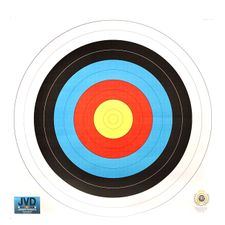
Hard quality reinforced archery paper target with 10 x circle score and 40 cm size.
TL024
Target JVD Face Fita 40 cm, 1 pc
Availability
In Stock: 240
Availability: in stock
Availability
In Stock: 240
Availability: in stock
0,48€
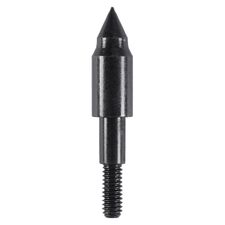
Ek-Archery spare hunting tip with a weight of 125 grains designed for both crossbow and bow arrows.
PK146
Hunting tip, target, sharp, EK-Archery, 125 grain. 2018
Availability
In Stock: 13
Availability: in stock
Availability
In Stock: 13
Availability: in stock
0,60€
Save: 13 %
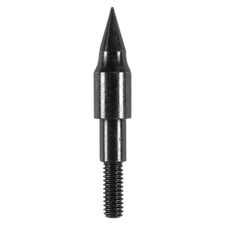
Spare screw target tip for Ek-Archery RX ADDER / ADDER TX R series 15" and Siege bolts.
PK164
Target tip, sharp, EK-Archery, 100 grain Adder / Siege, 1 pc
Availability
In Stock: 6
Availability: in stock
Availability
In Stock: 6
Availability: in stock
0,49€
0,56€
Save: 35 %
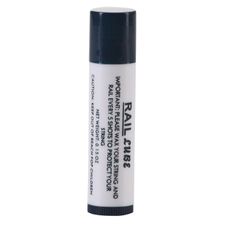
By lubricating rail, you reduce the friction between string and rail and prevent wear of the string.
PK061
Ek-Archery Rail lube for Crossbows
Availability
In Stock: 220
Availability: in stock
Availability
In Stock: 220
Availability: in stock
1,99€
3,08€
Save: 31 %
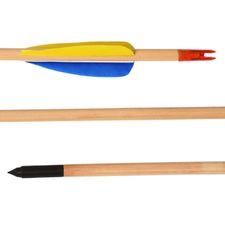
30" wooden arrow has hunting sharp tip, natural feathers - vanes 75 mm long and outer glued nock.
PK046
Wooden arrow, hunting 30” Ek Archery, 1 pc
Availability
Currently unavailable
Availability: temporarily unavailable
Availability
Currently unavailable
Availability: temporarily unavailable
3,33€
4,86€
Save: 12 %
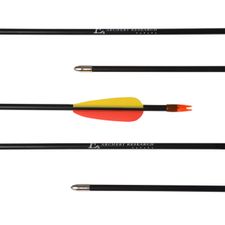
Quality 30" laminate arrow has target blunt tip and three polymer vanes 80 mm long.
PK052
Arrow laminate 30" target Ek Archery, 1 pc
Availability
In Stock: 212
Availability: in stock
Availability
In Stock: 212
Availability: in stock
2,95€
3,35€
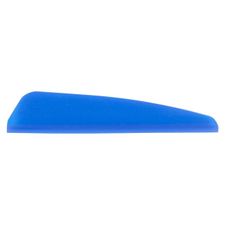
Spare vane Ek-Archery R-series in neon blue color for carbon crossbow bolts.
PK290
Vane Ek-Archery R9/ ADDER 2“ neon blue, 1 pc
Availability
In Stock: 98
Availability: in stock
Availability
In Stock: 98
Availability: in stock
0,25€
Save: 12 %
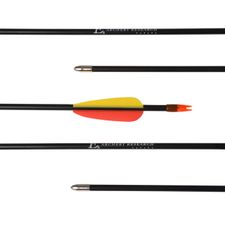
Quality 26" laminate arrow has target blunt tip 31 mm long and three polymer vanes 80 mm long.
PK152
Arrow laminate 26" target Ek Archery, 1 pc
Availability
In Stock: 11
Availability: in stock
Availability
In Stock: 11
Availability: in stock
2,20€
2,51€
Save: 68 %
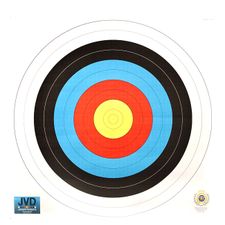
Archery target 80 x 80 cm made of special paper, reinforced with textile reinforcement.
TL008
Target JVD Face Fita 80 cm, 1 pc
Availability
Currently unavailable
Availability: temporarily unavailable
Availability
Currently unavailable
Availability: temporarily unavailable
1,10€
3,41€
Save: 28 %
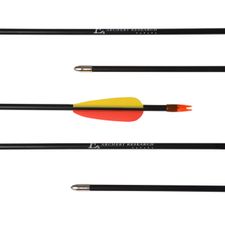
Quality 28" laminate arrow has target blunt tip 31 mm long and three polymer vanes 80 mm long.
PK051
Arrow laminate 28" target Ek Archery, 1 pc
Availability
In Stock: 39
Availability: in stock
Availability
In Stock: 39
Availability: in stock
2,40€
3,35€
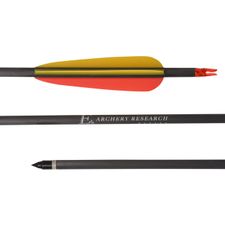
The 30" carbon target arrow for recurve and compound bows is durable and has a long life.
PK049
Arrow carbon, hunting 30" 7,8 mm Ek Archery, 1 pc
Availability
In Stock: 14
Availability: in stock
Availability
In Stock: 14
Availability: in stock
6,80€
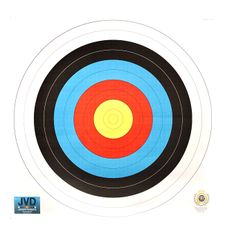
Archery target 60 x 60 cm made of special paper, reinforced with textile reinforcement.
TL007
Target JVD Face Fita 60 cm, 1 pc
Availability
In Stock: 70
Availability: in stock
Availability
In Stock: 70
Availability: in stock
0,75€
more categories

Save: 12 %
Tex-Tite waterproof wax can be used on both natural and synthetic strings.
PK223
String wax Bohning Tex – Tite
Availability
In Stock: 2
Availability: in stock
Availability
In Stock: 2
Availability: in stock
5,50€
6,25€
Sorry, product is forbidden to sell in your country.
Save: 7 %
Classic bow with draw weight of 10 to 15 Lbs for youth, packed with everything you need to shoot.
PK041
Bow recurve Chameleon, 15 lbs
Availability
In Stock: 4
Availability: in stock
Availability
In Stock: 4
Availability: in stock
21,90€
23,58€
Sorry, product is forbidden to sell in your country.
Vane Bohning Blazer 2“ designed for blade hunting tips or crossbows and 3D shooting.
PK306
Vane Bohning Blazer 2“ neon red
Availability
In Stock: 46
Availability: in stock
Availability
In Stock: 46
Availability: in stock
0,36€
Sorry, product is forbidden to sell in your country.
Spare vane Ek-Archery R-series and Whipshot in green color for carbon arrows for bow and crossbow.
PK401
Vane Ek-Archery R9/ RX/ ADDER/ Siege/ Whipshot 2“ flo-green, 1 pc
Availability
In Stock: 35
Availability: in stock
Availability
In Stock: 35
Availability: in stock
0,21€
Sorry, product is forbidden to sell in your country.
Extremely sharp blades, weight 100 gr., 4-blade knives made of steel, screwable, sharpenable.
TL059
Hunting broadheads Man Kung Hawk 4-blades, 3 pcs
Availability
In Stock: 3
Availability: in stock
Availability
In Stock: 3
Availability: in stock
15,90€
Sorry, product is forbidden to sell in your country.
Vane Bohning Blazer 2“ designed for blade hunting tips or crossbows and 3D shooting.
PK251
Vane Bohning Blazer 2“ bright orange
Availability
In Stock: 42
Availability: in stock
Availability
In Stock: 42
Availability: in stock
0,36€
Sorry, product is forbidden to sell in your country.

Extremely sharp blades, weight 100 gr., 3-blade knives made of steel, screwable, sharpenable.
TL058
Hunting broadheads Man Kung Hawk 3-blades, 3 pcs
Availability
In Stock: 6
Availability: in stock
Availability
In Stock: 6
Availability: in stock
15,90€
Sorry, product is forbidden to sell in your country.
Vane Bohning X3 Shield cut 1.75" for 3D shooting, indoor target shooting, Fita and field shooting.
PK267
Vane Bohning X3 Shield cut 1.75“ white
Availability
In Stock: 8
Availability: in stock
Availability
In Stock: 8
Availability: in stock
0,40€
Sorry, product is forbidden to sell in your country.
Save: 13 %
A simple Crusader bow at a very low price made of quality material that you won't destroy easily.
PK039
Bow recurve Crusader, 12 lbs, 112 cm
Availability
In Stock: 2
Availability: in stock
Availability
In Stock: 2
Availability: in stock
12,90€
14,90€
Sorry, product is forbidden to sell in your country.
Original Ek-Archery nock for carbon arrows for bows, plastic.
PK200
Nock Ek-Archery for bow´s carbon arrows, ID 6.1 mm
Availability
In Stock: 13
Availability: in stock
Availability
In Stock: 13
Availability: in stock
0,41€
Sorry, product is forbidden to sell in your country.
Vane Bohning Blazer 2“ designed for blade hunting tips or crossbows and 3D shooting.
PK252
Vane Bohning Blazer 2“ white
Availability
In Stock: 3
Availability: in stock
Availability
In Stock: 3
Availability: in stock
0,34€
Sorry, product is forbidden to sell in your country.
By lubricating the rail, you reduce friction between string and rail and extend life of the string.
SB022
Steambow Stinger AR-6 Rail lube for Crossbows
Availability
In Stock: 6
Availability: in stock
Availability
In Stock: 6
Availability: in stock
4,95€
Sorry, product is forbidden to sell in your country.
A handy archer's tool for easier arrow retrieval from the target range.
PK258
Arrow puller Cartel Midas, black
Availability
In Stock: 4
Availability: in stock
Availability
In Stock: 4
Availability: in stock
4,70€
Sorry, product is forbidden to sell in your country.
A hunting tip with a unique design and construction, suitable for stunning or hunting birds.
PK430
Hunting broadhead Cheap shot BH4 Wrecking Ball 100 grain, 1 pc
Availability
In Stock: 75
Availability: in stock
Availability
In Stock: 75
Availability: in stock
1,74€
Sorry, product is forbidden to sell in your country.
Save: 4 %
Children's bow, two arrows, arrow quiver, forearm protector, paper target in a convenient set.
PK043
Bow compound Chameleon, 15 lbs
Availability
In Stock: 1
Availability: in stock
Availability
In Stock: 1
Availability: in stock
26,95€
28,19€
Sorry, product is forbidden to sell in your country.
Save: 14 %
Powerful EK Archery Buster compound bow in camo color for juniors and beginning shooters.
PK034
Bow compound Buster, 15 - 29 lbs, camo
Availability
In Stock: 1
Availability: in stock
Availability
In Stock: 1
Availability: in stock
77,90€
90,20€
Sorry, product is forbidden to sell in your country.
Save: 23 %
Leather - open arrow quiver with a reinforced bottom and a simple belt clip.
PK055
Quiver for arrows Ek Archery
Availability
In Stock: 6
Availability: in stock
Availability
In Stock: 6
Availability: in stock
7,30€
9,49€
Sorry, product is forbidden to sell in your country.
Spare vanes for duralumin and wooden arrows for crossbows and bows, in neon red and yellow.
PK171
Vanes Ek-Archery 2,5", set 10 pcs
Availability
In Stock: 3
Availability: in stock
Availability
In Stock: 3
Availability: in stock
3,59€
Sorry, product is forbidden to sell in your country.
Compound bow with a draw weight of 55 lbs is ideal for beginners and shooting at longer distances.
PK029
Bow compound Protex 55 lbs, black
Availability
In Stock: 1
Availability: in stock
Availability
In Stock: 1
Availability: in stock
111,72€
Sorry, product is forbidden to sell in your country.
Products Comparison
Products Comparison
No products to compare.
BOWS
The bow as a mechanical weapon is much older than the crossbow. Scientists believe that it began to appear in Africa around 40,000 years ago. It came into use in Europe about 10,000 years ago and in America about 1,000 years BC. It was undoubtedly invented to make hunting animals, that were a source of food for humans, easier and more efficient. Using a bow for hunting was certainly safer than using a weapon for hunting at close range. There are several hypotheses and theories as to how it came into existence. The most famous is the theory that it was developed from a musical instrument, or that people accidentally noticed what a bent and suddenly straightened tree or branch could do. Each nation was distinguished by its specific bow shape.
The bows today are modernized and have a wide division. The wooden material of the bow is replaced by fiberglass composite, or carbon. The inflexible part or string is braided from fine Kevlar fibers for durability and high resistance to wear and tear.
Generally, bows are divided by construction into traditional recurve (reflection - recoil of bent limbs) and compound (cams as a complex cam system). Thus, we have two primary categories of bows. Traditional recurve bows are further subdivided into Olympic, barebow, riding, traditional recurve, and longbow bows.
Olympic bows are a recurve type bows, with no restrictions on material; further they use special equipment for the best results of the archer. They are mostly foldable, with a riser made of high-quality duralumin. The limbs are chosen according to the preference and experience of the archer, also these bows need to be do-equipped with the necessary accessories such as sights, stabilizers, etc. Such bows are also called competition bows.
The second type of recurve bows are long bows (English bows). The material of the bow is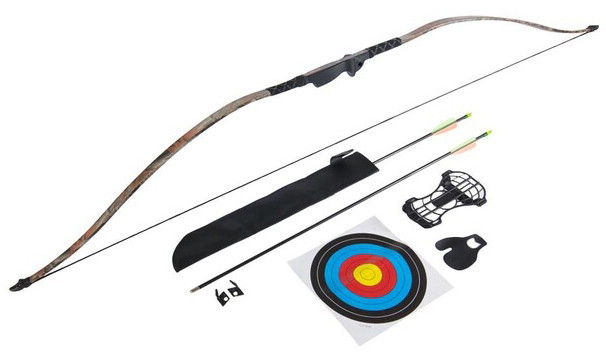 wooden or composite fiberglass. This type of bow was created in antiquity, but it was massively spread only in the 12th-13th centuries. It is clear from the name that it is a larger bow and its length reaches about 150-180 cm (unstrung). That is why it had a greater draw weight and power. In the 14th century this bow became the national weapon of England and every subject was obliged to practice shooting. Even the English hero Robin Hood defended his honor with this type of bow. Thus, in the past it was used for hunting and defensive purposes, today, the Long bow, is a bow in the category of competition bows.
One of the best-selling groups of bows are traditional recurve bows. Simple in design, suitable for children, youth and adolescents, women and men. Mostly for beginners. Often fully equipped and in a set ready to shoot.
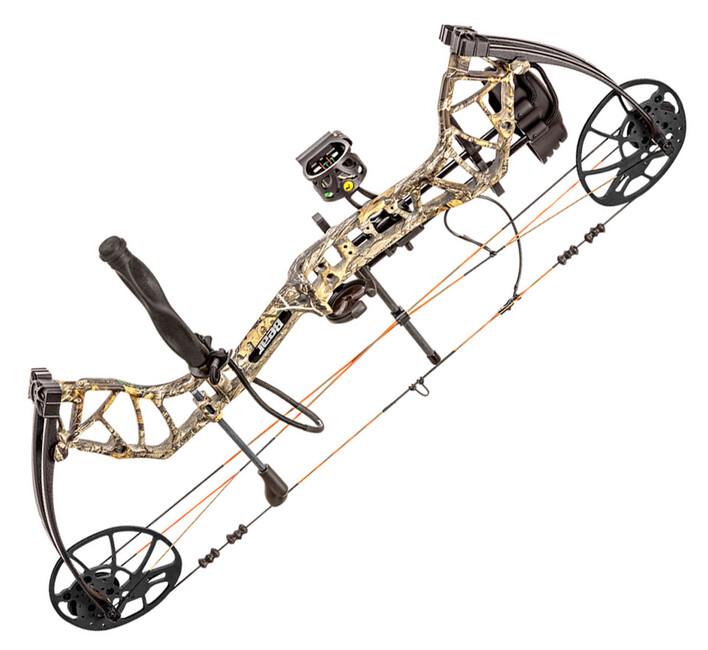 Another criterion for the right choice of a bow is its draw weight. To choose the right bow, you need to consider your options, because you will need to put some effort in cocking the string. The strength of the bow is indicated in lbs. You also need to know the length of the string, which is neither too long nor too short. The draw weight and the draw length are indicated on almost every bow. The draw weight for beginners is in the range of up to 20-30 lbs. This is also true for women and juniors. However, it must be stated that every shooter is unique and these recommendations may not be accurate for everyone. For advanced archers, a draw weight of 30 lbs. or more is appropriate. As for choosing a compound bow, these are modern mechanical weapons that will literally teach you how to shoot in a matter of no time. There are models of compound bows that are extremely versatile (adjustable) for the whole family. That is to say, a good quality compound bow can be tuned by draw weight, and you can change the draw length as well. Top compound bows for the whole family are for example Bear Cruzer 2/3, Bear Legit or PSE Stinger Maxx.
Very important when choosing a bow is your posture or orientation, i.e. whether you are right- or left-handed. Or rather, what will be your dominant aiming eye. But if you are right-handed, choose bows marked RH (right hand) right-handed grip. This means you hold the bow with your left hand and cock the string with your right. For left-handed people, the bow is again marked LH (left hand). As a left-handed person, you hold the bow exactly the opposite way, with your right hand and cock the string with your left.
Arrows for bows are a special category. You must always purchase arrows that are at least 1" longer than the draw length of the bow you will be using. Also pay attention to the material the arrow is made of or what type of broadhead it uses. If you are unsure of the arrows to match your bow, let us give you expert advice. For pro archers, for example, the so-called SPIN - the stiffness of the arrow - is also important, as it determines how the arrow will bend in flight and thus how accurate it will be. The lower the SPIN number, the stiffer the arrow is and the more powerful bow needs to be. Less stiff arrows are in turn designed for less powerful bows.
If your bow is not complete, don't forget to buy the needed accessories, you should also think about hand and finger protection, such as armguards and gloves. This will prevent the string from scratching your skin when you shoot.
Another essential accessories of an archer are certainly a target ranges and targets. A proper target range will save you a lot of time with making a homemade alternative, which is often not enough. You need a strong and bulletproof target range for compound bows, and conversely a weaker but effective one for recurve or children's bows. A proper target range must stop the arrow and not to damage its vanes. Archery is a beautiful sport that can enchant at any age. If you haven't tried it yet, don't hesitate and maybe you'll fall in love with it too!
Latest articles

The most powerful crossbow
04. August 2025
Crossbows rank among the most powerful and accurate firearms without the use of a gunpowder. They are used in sport and recreational shooting, hunting and in some cases for tactical purposes. In this article, we will look at what the term the most powerful crossbow means, how its power is measured, and what is the use of extremely powerful models.

Compound vs Recurve Bow – A Comparison
13. June 2025
Archery is not only a traditional craft, but also a modern sport and a popular recreational activity. Bows and arrows find their fans across generations - from children to experienced shooters. However, choosing the right bow can be a challenge, especially if you are hesitating between the two most commonly used types: the compound bow and the recurve bow.
Each of them has its own specifics, advantages and limitations that affect the shooting technique, comfort of use and the purpose for which the bow is intended. In this article, we'll take a look at the main differences between the two types of bows, compare their parameters, and help you figure out which bow is right for you.
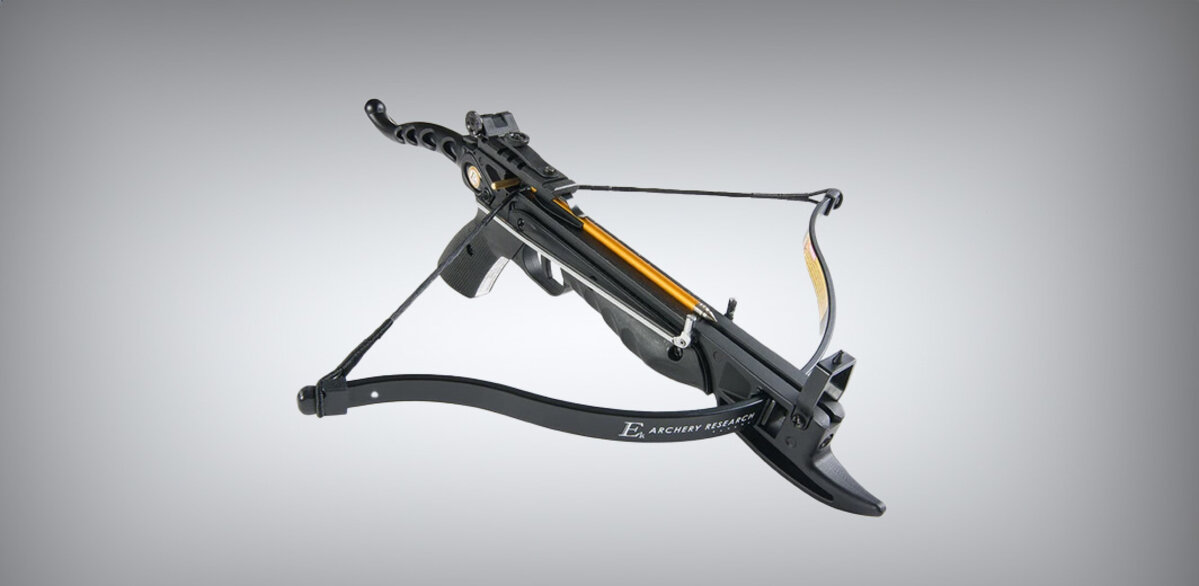
Pistol crossbows and their use
25. October 2023
Pistol crossbows are ranked among the effective mechanical weapons mostly with a draw weight of 50 to 80 pounds. Their size and shape often give the impression that they are merely toys. But beware! Such small crossbows are effective and powerful enough to kill smaller rodents, for small game, etc. They go through improvements in design, power, handling, and even the types of shots or bolts used. Today's pistol crossbows can reach a muzzle velocity of up to 235 fps - 72 m/s.


We recommend